Page 1 of 1
Polishers
Posted: Wed Jul 27, 2011 11:33 am
by whaleys
Hi Guys,
My question is, Rotary or Dual Action? I have been using a dual action polisher for years and was looking to replace it. For a few days I was looking at rotary polishers but have managed to scare myself out of it but I was looking for advice. Are rotary polishers really as dangerous as they are made out to be? From what I've read, the articles say that you should always check paint thickness etc if using a rotary. I don't have one and tbh don't think I want to invest in one as they seem rather expensive. As a result should I just stick with a dual action and get one of the more powerful ones 850w+ or should I just man up and get a rotary cause they are not all bad?
All advice welcome as I know there are some serious detailer's here.
Thanks,
Graeme
Re: Polishers
Posted: Wed Jul 27, 2011 1:25 pm
by tuscan_thunder
My view: go for the DAS6 Power Plus.
It's the 850w motor, it's got a good bit more torque but it's a lot safer than using at rotary. (Plug: we'll have them back in stock in about 3 weeks time:
http://www.polishedbliss.co.uk/acatalog ... isher.html)
If you're working on the Lotus, heat build up will be one of the key issues; the glassfibre just doesn't dissipate heat like metal panels do - too much heat equals bubbled paint. The rotary can build up heat pretty quickly; the DA will minimise heat. Yes, the correction will take a little bit longer but it won't be a huge amount different. If you were to be using it every day, then a rotary would be more comfortable but if it's more amateur use, the DA will be fine; the vibration etc is well within safe working tolerance, even being used on a very regular basis.
The extra torque of the Power Plus makes a big difference, especially on harder paints.
As well as heat build up, the rotary can (will) remove more paint, more quickly so I do advise using a paint gauge with a rotary (ideally with a DA too but it's not
quite so vital as your rate of removal is much less.
I've obviously got access to both but generally use the DA - I only really use the rotary if it's a serious full correction job. I also find refining faster with the DA.

Re: Polishers
Posted: Wed Jul 27, 2011 2:12 pm
by whaleys
Thanks a lot, I had been looking at the DAS6 that you sell but I just wasn't sure if it was pointless really getting one unless I was to go for a rotary. Your advice is exactly what I was looking for and its interesting to know that you try using the DA first.
Now that I am fairly confident/reassured in going for a DA (will buy the DAS6 PRO/Plus) the next question is polishes and pads, it seems like a pretty dark art deciding on which polish to use and with which pad. As an example for a car, say a Freelander, which has the standard swirl marks from washing with a sponge in dirty water and putting it through car washes, no deep scratches just swirls, what would you recommend?
Then would the same process be applied to the Lotus or should there be a different treatment because it's fiberglass?
I've never really known whats best but have just gone on what people have said that "seemed to be quite good when they did it". I've also never been sure with the polishes that break down, when exactly they have been fully broken down. If I'm asking about something that takes years of experience that cant just be written in a paragraph or two, please forgive my ignorance, but I've figured I won't know unless I ask

Thanks,
Graeme
Re: Polishers
Posted: Wed Jul 27, 2011 2:32 pm
by whaleys
Just looking at the car care advice section of the Polished Bliss site

Re: Polishers
Posted: Wed Jul 27, 2011 2:38 pm
by Rich H
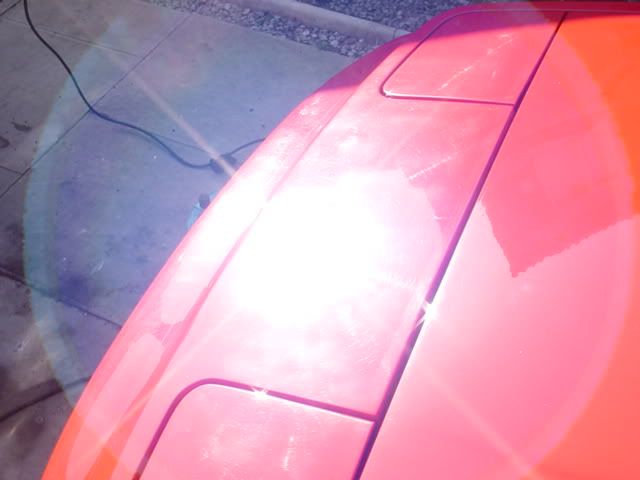
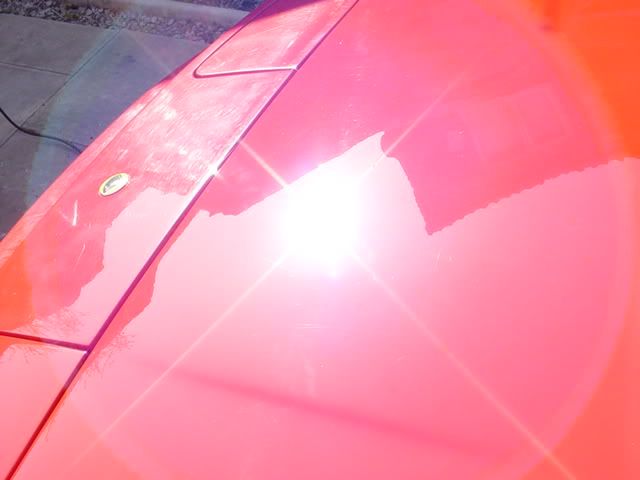
I got the DAS6 kit that T_T recommended for the Esprit and have had zero issues with it, its a surprisingly well built bit of kit with little touches that make it even more appealing (Like spare motor brushes included in the kit). The main problem is time! I went for 3M synthetic sealant rather than a organic wax as it lives outside and I wanted a tough durable finish I could ignore for a while.
It's easy enough to do, even for someone like me more in tune with impact engineering, and the results are great! Follow the guides on Polished Bliss's site.
One thing that does upset me slightly is that you do all the hard work and you will see your car is now properly stunning but you will be tempted to leave half a panel so you can point to it and say 'look how bad it was!'

The best thing I have found is the Esprit now glows in low lighting/twilight (No it's not on fire) as the paint is now so much better.
SWMBO thinks I'm mental but can appreciate the difference it's made.
Do it.
Rich
EDIT: Still need some pics to enter into PB's competition! It's getting papered (ie washed) again in time for the Lytham Classic show in a couple of weeks so will get some then.
Sh!t camera but you get the idea:
Re: Polishers
Posted: Wed Jul 27, 2011 2:43 pm
by tuscan_thunder
The guides are a good place to start.
You do start to get a feel for how polishes work etc.
Menzerna polishes start to go clear when they've broken down. One of the most common issues I see is people not working the polishes long enough or hard enough to break down the abrasives - this either doesn't give them the result they're after or results in mircomarring of the surface (fine scratches from the unbroken abrasives moving across the paint surface). In terms of 'passes' over a given panel, I'd aim for at least 20; some polishes need nearer 30.
Lotus paint is a bit odd as it's not quite hard but it's harder than general intermediate paints. I find it nice to work with as there's a sort of slickness to it. (For reference, apart from really deep marks, Menzerna RD3.02 and a Lake Country Cyan pad will be ideal for correction on a Lotus. Maybe Meguiar's 105 if the defects are deep. Menzerna 85RE on a Lake Country Crimson is ideal for refining). Use the back of your hand on the panel to check temperatures. If you can hold your hand on it for a few seconds, it should be fine.
Land Rover paint is odd - it tends to be 'sticky' and a rotary machine can often hop about on it. A DA doesn't suffer from this issue. It's not, generally, particularly hard paint. I'd be looking, unless you're going for 100% correction, to do a one step job on LR paint. Menzerna 203S and Lake Country Tangerine pad is ideal. It has enough cut to correct all but the deepest defects but breaks down really well to leave a really sharp finish.
Feel free to ask - I'm happy to advise.
(Rich: glad you're getting on well: I await your show and shine entry! - this blog post might be useful too:
http://www.polishedbliss.co.uk/blog/201 ... and-shine/ )
Re: Polishers
Posted: Wed Jul 27, 2011 3:05 pm
by Justin
I'd go rotary. Ive found them much better, the dual actions are good for learning/safer though
Re: Polishers
Posted: Wed Jul 27, 2011 3:54 pm
by tuscan_thunder
Until not long ago, I'd have agreed with Justin; the DAS6 Power Plus has changed that - the extra torque, coupled with the lower risk of the DA over the rotary, swings it for me.
Re: Polishers
Posted: Wed Jul 27, 2011 3:56 pm
by whaleys
Thanks for all the info, it has been REALLY helpful.
Cheers!
Graeme
Re: Polishers
Posted: Wed Jul 27, 2011 5:03 pm
by graeme
I went for a rotary, and while it took a few panels to get used to how it moves with the torque, it's quite easy after that. Having tried the rotary, it's total overkill, and a DA would have done fine, and would be easier to control, but I didn't know that when I bought it. Quite happy with the rotary, but I'd say get a DA.
My top tip? MASK EVERYTHING!! If it's rubber or plastic you don't want to touch it with the pad! I just taped the edges next to paintwork, but 25mm of masking tape was not enough for my clumsy hands, and I managed to ruin a few bits of plastic trim.
Everything else is dead easy if you follow the guides.

Re: Polishers
Posted: Thu Jul 28, 2011 3:34 pm
by whaleys
Another question
After the polish stage, would you apply a glaze, then a wax? or just just straight to the wax?
Also, what should be done by hand and what with the machine?
And where would the likes of Super Resin Polish fit into this, if anywhere?
Re: Polishers
Posted: Thu Jul 28, 2011 3:43 pm
by tuscan_thunder
whaleys wrote:Another question
After the polish stage, would you apply a glaze, then a wax? or just just straight to the wax?
Also, what should be done by hand and what with the machine?
And where would the likes of Super Resin Polish fit into this, if anywhere?
A glaze, generally speaking, just masks minor defects.
If you're corrected the paint properly, the a glaze is probably going to be redundant.
Then just go to sealant or wax: for silver, definitely go for a sealant; it gives a sharper finish, more reflective, due to the way light penetrates the paint surface. The Werkstat Acrylic is awesome.
http://www.polishedbliss.co.uk/acatalog ... -cat1.html (paint cleanser/prep sealant, sealant, quick detailer and all the pads and towels you need)
Apply sealants and waxes by hand. You only really need the machine for correction.
(SRP is a bit of a jack of all trades and, in my view, a complete waste of time! It's got some very minor abrasives, some filling capability and some protection. Far better to do the job right in my view!)