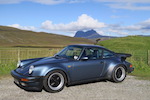
I put some Xenon lights into the 911 a couple of years ago. The instructions were non existant and the 911 wiring is amazing so it is a wonder they ever worked. They do work, unfortunately on the sidelight position as well.
MOT's seem to be getting stricter and they will not pass the car unless I can get the sidelights on by themselves.
The sidelights will work by themselves when the ignition is off ie no power to headlights, which prevents the controller relay from firing the ballasts.
As far as I can see (because I don't really remember), the sidelights and the headlights have individual +ves but shared negatives. On a 911 the -ve is effectively earth so I can't understand how this could cause the Xenon ballast to fire, but it seems to be the only possibility. The controller relay is plugged into one of the original headlight connectors and therefore has a negative connection. The ballasts themselves are wired direct to the battery.
Open to suggestions, meanwhile testing will continue until I can get a clever person around to trace all the wires.
Kerry
NLC auto sparky required

Re: NLC auto sparky required
Do you have a link for the kit you've fitted, or fitting instructions for any Xenon kit ... I'm not sure how they work, but if I knew how they worked, I would probably be able to help you sort it out.
Cheers,
Robin
Cheers,
Robin
I is in your loomz nibblin ur wirez
#bemoretut
#bemoretut
-
steve_weegie

- Posts: 3249
- Joined: Tue Jun 28, 2005 12:40 am
- Location: Nessieland
Re: NLC auto sparky required
If you let me know what model of 911 you've got, i'll see if i can get a wiring diagram too 
Arriving broadside, in a cloud of smoke......
Re: NLC auto sparky required
http://www.novablue.co.uk/Xenon%20HID%2 ... l%20v1.pdf
Fig 2 in the instructions above is pretty much what I've got, which all looks simple enough, unfortunately the 911 (1986 model) has the lights in the wings like the lotus so wiring is a bit more complex than plug an play. All lights at each side are negatively earthed via a common wire with connections.
You use one of your old headlight connectors to provide the current to the controlling relay, which then either puts the lights on for dip or high beam (essentially the same light just the shroud rotates to give a high or low beam).
When I put the sidelights on the controller is somehow picking up a current which puts the lights on. I've got a wiring diagram in the 911 bible.
Probably not much help understanding the issue. I'm off to do some systematic testing and wire tracing.
Kerry
Fig 2 in the instructions above is pretty much what I've got, which all looks simple enough, unfortunately the 911 (1986 model) has the lights in the wings like the lotus so wiring is a bit more complex than plug an play. All lights at each side are negatively earthed via a common wire with connections.
You use one of your old headlight connectors to provide the current to the controlling relay, which then either puts the lights on for dip or high beam (essentially the same light just the shroud rotates to give a high or low beam).
When I put the sidelights on the controller is somehow picking up a current which puts the lights on. I've got a wiring diagram in the 911 bible.
Probably not much help understanding the issue. I'm off to do some systematic testing and wire tracing.
Kerry
Re: NLC auto sparky required
OK, I'm assuming you have something like what is described in their H4-flex variant rather than the one that needed a hole cutter to fit?
In their H4 installation the ballasts are connected to the controller relay, whilst the controller relay gets a -ve and +ve connection from the battery/chassis directly. Is this what you have done?
A very simple test would be to remove the H4 connector from the controller relay and then turn on the sidelights to see whether the HIDs still light up. Also use a multimeter and check the following:
(1) Resistance to the chassis earth from the -ve terminal of the controlling H4 connector.
(2) Ignition on, side lights/head lights off, voltage at the other two terminals of the H4 connector.
(3) Ignition on, side lights on/head lights off, voltage at the other two terminals of the H4 connector.
(4) Ignition on, side lights on/head lights on, voltage at the other two terminals of the H4 connector.
(5) Ignition off, side lights on/head lights off, voltage at the other two terminals of the H4 connector.
It would also be worth measuring the resistance from the negative terminal of the side light connector to the chassis earth.
I suspect either (a) the H4 connector on your 911 isn't quite what you thought it was or (b) a bad earth.
Cheers,
Robin
In their H4 installation the ballasts are connected to the controller relay, whilst the controller relay gets a -ve and +ve connection from the battery/chassis directly. Is this what you have done?
A very simple test would be to remove the H4 connector from the controller relay and then turn on the sidelights to see whether the HIDs still light up. Also use a multimeter and check the following:
(1) Resistance to the chassis earth from the -ve terminal of the controlling H4 connector.
(2) Ignition on, side lights/head lights off, voltage at the other two terminals of the H4 connector.
(3) Ignition on, side lights on/head lights off, voltage at the other two terminals of the H4 connector.
(4) Ignition on, side lights on/head lights on, voltage at the other two terminals of the H4 connector.
(5) Ignition off, side lights on/head lights off, voltage at the other two terminals of the H4 connector.
It would also be worth measuring the resistance from the negative terminal of the side light connector to the chassis earth.
I suspect either (a) the H4 connector on your 911 isn't quite what you thought it was or (b) a bad earth.
Cheers,
Robin
I is in your loomz nibblin ur wirez
#bemoretut
#bemoretut
Re: NLC auto sparky required
Thanks Robin.
It's been a learning experience as usual, but that's where the fun is! From what I can figure out by testing and general diagnostics, everything is working as it should the way it is wired up. The earth is perfect because I put it a direct connection in. The problem is that the original 911 setup puts the headlights on dim when you go to the first stop. With the Xenon setup it doesn't do dim, see's the voltage and fires up full power.
I took the light switch out, it looks like a barrel with about 20wires connected to it. One of which must be a lower signal to the relay to put the dim headlights on at the first stop position. If I can disconnect that I should hopefully have a solution, ie sidelights only at the first stop without headlights. Hopefully it is as simple as that but maybe not...........
I can't see when I would ever use that but those are the MOT rules and I can't offer adim headlight with the Xenon setup so this is the only option.
Kerry
Kerry
It's been a learning experience as usual, but that's where the fun is! From what I can figure out by testing and general diagnostics, everything is working as it should the way it is wired up. The earth is perfect because I put it a direct connection in. The problem is that the original 911 setup puts the headlights on dim when you go to the first stop. With the Xenon setup it doesn't do dim, see's the voltage and fires up full power.
I took the light switch out, it looks like a barrel with about 20wires connected to it. One of which must be a lower signal to the relay to put the dim headlights on at the first stop position. If I can disconnect that I should hopefully have a solution, ie sidelights only at the first stop without headlights. Hopefully it is as simple as that but maybe not...........
I can't see when I would ever use that but those are the MOT rules and I can't offer adim headlight with the Xenon setup so this is the only option.
Kerry
Kerry
Re: NLC auto sparky required
I wondered about that which is why I suggested measuring the voltage on the H4 connector with side lights on and main lights off.
Assuming the old H4 bulbs were of the halogen type, you can make them dim by passing less current through them, so in the barrel switch or loom there must be a resistor to reduce the current, and it must splice from the side light +12 circuit to the dipped beam +12 circuit.
You could counter this by strapping a resistor from the dipped beam +12v circuit to ground right at the controlling H4 connector, or you can find the resistor and cut it out of the switch/loom.
It might be instructive to measure the resistance of that resistor - you could do this by measuring the resistance from the dipped beam +12 terminal on the controlling H4 connector to the side light +12v circuit when the side lights are on and the head lights are off. Depending on the value of this resistor it might be practical to slug the signal enough to prevent the relay from engaging in this case.
However, removing the resistor would be a better solution if you can find it.
Cheers,
Robin
Assuming the old H4 bulbs were of the halogen type, you can make them dim by passing less current through them, so in the barrel switch or loom there must be a resistor to reduce the current, and it must splice from the side light +12 circuit to the dipped beam +12 circuit.
You could counter this by strapping a resistor from the dipped beam +12v circuit to ground right at the controlling H4 connector, or you can find the resistor and cut it out of the switch/loom.
It might be instructive to measure the resistance of that resistor - you could do this by measuring the resistance from the dipped beam +12 terminal on the controlling H4 connector to the side light +12v circuit when the side lights are on and the head lights are off. Depending on the value of this resistor it might be practical to slug the signal enough to prevent the relay from engaging in this case.
However, removing the resistor would be a better solution if you can find it.
Cheers,
Robin
I is in your loomz nibblin ur wirez
#bemoretut
#bemoretut